
Getting Up and Getting Down: The Skill We Shouldn’t Take for Granted
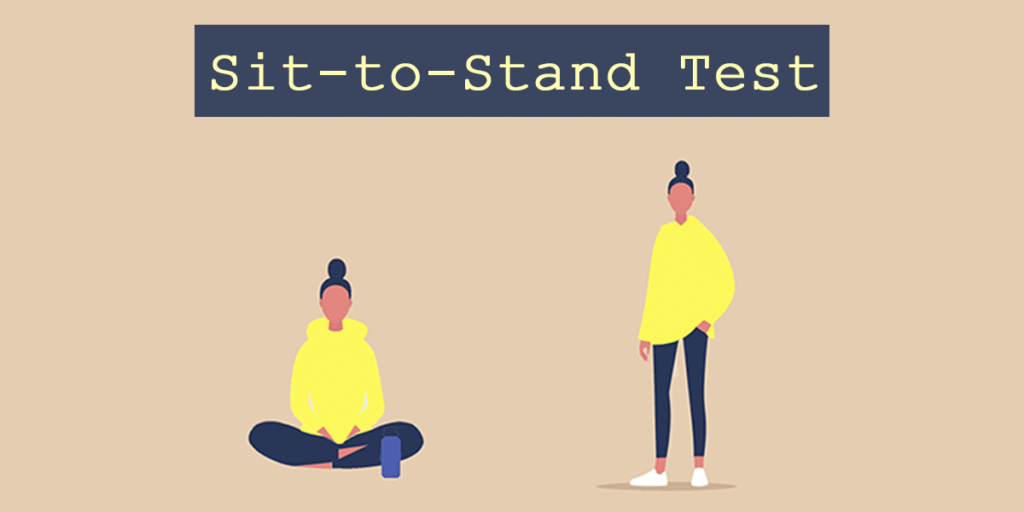
Source: www.bodi.com
When was the last time you sat down on the floor? Not on a chair. Not on the couch. Not on the edge of your bed. The floor. And perhaps the more important question: once you got down there, how easily did you get back up? Familiar with this longevity test called the Sitting Rising Test (SRT) or Sit Stand Test (SST)?
For many of us, getting down to the floor and standing back up is something we barely think about—until it starts to become difficult. When we’re younger, we drop to the floor, sit cross-legged, kneel, squat, roll around, and pop right back up without giving any of it much thought. Then somewhere along the way, the floor starts to feel very far away. We may start using a hand to push ourselves up. Then two hands. Maybe a knee goes down first. Maybe we look for the nearest piece of furniture to grab. Or perhaps we simply stop getting down on the floor altogether.
But getting down and getting back up is more than just one movement. It is a combination of mobility, strength, balance, coordination, and control. Maintaining the ability to do it is an important part of staying capable and independent as we age. That sounds like a pretty good reason to practice it.
Getting Down Is a Movement Skill
We often think of fitness in terms of individual exercises. Can you do a squat? Can you hold a plank? Can you balance on one leg? But real life doesn’t usually ask us to perform one perfectly isolated exercise. Instead, our bodies have to put several different skills together, often without much time to think about how we’re doing it.
Getting down to the floor is a great example. To lower yourself with control, your hips, knees, and ankles need enough mobility to bend. Your legs need enough strength to support your body as you descend. Your core needs to stabilize you while your balance adjusts as your center of gravity changes. Your brain also has to coordinate the entire sequence so all of those pieces happen at the right time.
Then, once you’re down there, you have to reverse the process. Suddenly, “getting off the floor” sounds a lot more like a full-body exercise. Because it is.
Why Getting Back Up Matters
Being able to get up from the floor is closely connected to something I talk about often: functional movement. Functional movement is simply movement that helps us do the things we need and want to do in everyday life. And although getting on and off the floor may not seem as obvious as carrying groceries or climbing stairs, it shows up in our lives more often than we might realize.
Maybe you’re getting down on the floor to play with your grandchildren, garden, clean out a low cabinet, or reach under the bed for the shoe that somehow migrated all the way to the wall. And sometimes getting down to the floor isn’t intentional at all. Falls happen, and if you do end up on the floor, having the strength, mobility, and coordination to get yourself back up can be an important part of maintaining independence.
This doesn’t mean everyone needs to spring up from the floor without using their hands. Using your hands, a chair, or another stable surface is not “cheating.” The goal isn’t to win a floor-transfer competition. The goal is to maintain as many movement options as possible.
The Floor Can Tell You a Lot
One of the interesting things about getting down and back up is that it can reveal where movement has become limited. Maybe your ankles don’t bend as easily as they used to, making a deep squat uncomfortable. Maybe one hip feels much tighter than the other. Maybe kneeling bothers your knees. Maybe you can lower yourself easily, but getting back up requires a lot more effort. Or maybe strength isn’t the issue at all—perhaps balance is what makes you hesitant.
None of those things automatically mean something is “wrong.” They’re information. They tell you something about how your body is moving today and where you might benefit from a little more attention.
Our bodies are also very good at finding ways around movements we don’t use often. If a certain position becomes uncomfortable or difficult, we naturally start avoiding it. Unfortunately, avoiding a movement can make us even less comfortable doing it. Movement options have a funny way of disappearing when we stop using them.
There can also be another piece to this: confidence. If getting down starts to feel uncertain, we may stop getting down. If getting back up feels difficult, we may avoid situations where we’ll have to do it. The less often we practice the movement, the less familiar it becomes—and something that once felt automatic can start to feel like a much bigger task. Sometimes maintaining the ability to get up and down is as much about continuing to practice the skill as it is about building more strength.
That is one reason Pilates can be so helpful.
Pilates Has Been Preparing You for This
If you practice Pilates regularly, you are already working on many of the ingredients required to get down and get back up. You may just not have thought about them that way. Pilates gives us opportunities to move through different positions while developing the strength, mobility, coordination, and control that make those transitions possible.
Think about Rolling Like a Ball. You’re moving your body through space, controlling momentum, maintaining your shape, and returning to balance. In Single Leg Stretch or Double Leg Stretch, your abdominals stabilize your trunk while your arms and legs move independently. Shoulder Bridge asks your hips and legs to work while your pelvis remains controlled. And in Leg Pull Front or a plank, your shoulders, arms, core, and legs work together to support your body weight.
Even the simple act of getting onto your mat at the beginning of your Pilates session and standing back up when you’re finished is functional movement. We tend to think the workout begins once we’re on the mat, ready for the Hundred or Roll Up. But maybe the workout actually begins before that. How you lower yourself to the mat, move through different positions, and eventually get yourself back to standing are all opportunities to practice the very skills we want Pilates to help us maintain outside the studio.
Pilates doesn’t just teach muscles to become stronger. It teaches the body to organize itself during movement. That distinction matters because that is exactly what we need our bodies to do outside the studio.
Strength Is Only Part of the Equation
If getting up from the floor feels difficult, it can be tempting to assume you simply need stronger legs. Stronger legs certainly help, but strength alone isn’t enough. Your hips need to flex, rotate, and extend. Your knees need to bend. Your ankles need enough range of motion to help you shift your weight, and your spine needs to move and stabilize at different points throughout the transition.
You also need balance because your base of support changes constantly as you move from the floor to standing. And you need coordination because getting up from the floor isn’t one movement—it is a sequence of movements that have to work together.
This is where Pilates shines. Pilates asks you to combine strength with mobility, stability with movement, and control with coordination. In other words, exactly what life asks us to do.
There Isn’t Just One “Right” Way to Get Up
Watch a group of people get up from the floor and you’ll probably see several different strategies. Someone might roll onto one knee and step forward into a lunge. Someone else might come into a squat and stand. Another person may place both hands on the floor first, while someone else may use a nearby chair for support.
All of these can be useful strategies. Rather than insisting there is one perfect way to get up, I’m more interested in whether you have options. Can you lead with either leg? Can you kneel comfortably? Can you shift your weight from side to side? Can you use your arms when needed? Can you move from sitting to kneeling to standing?
Having choices gives your body adaptability. It also means you aren’t completely dependent on one particular movement strategy. And adaptability is incredibly useful as we age.
Practice the Transition, Not Just the Exercises
We spend a lot of time exercising once we’re on the mat. But what if getting onto the mat and getting off the mat became part of the practice too? The next time you lower yourself to the floor, pay attention to how you do it. Can you slow the movement down? Can you notice where your weight shifts? Can you use your legs to control the descent instead of dropping the last few inches?
When you stand back up, notice your strategy there too. Do you always lead with the same leg? Do you automatically push off with one hand? Is one side noticeably easier than the other? You don’t need to judge any of it. Just notice. Then, occasionally, try another way—assuming it feels safe and appropriate for your body.
The goal isn’t to make getting up unnecessarily difficult or to remove support just to prove you can. The goal is to keep practicing the movements that allow you to remain capable and confident.
Don’t Wait Until Getting Up Is Hard
This is the part I think we sometimes get backward. We tend to work on abilities after we notice we’re losing them. Balance becomes shaky, so we start practicing balance. Getting out of a chair becomes harder, so we start strengthening our legs. Getting down to the floor feels uncomfortable, so instead of practicing it, we may simply stop doing it.
But what if we practiced these things before they became difficult? You don’t wait until you’re dehydrated to decide water might be useful. Movement deserves some of that same preventative thinking. Maintaining a skill is often easier than trying to regain it after we haven’t used it for a long time.
Getting down and getting back up may not be the flashiest fitness goal. Nobody is putting “successfully got off the floor” on a workout T-shirt. But maybe we should give it a little more credit. The ability to move confidently between standing and the floor represents a whole collection of skills: strength, mobility, balance, coordination, body awareness, and confidence. More importantly, it represents independence.
Keep Getting Down on the Floor
One of the best ways to maintain a movement is to keep doing it. Sit on the floor occasionally. Get down there to stretch. Play with the dog or the grandkids. Do your Pilates mat work. Practice kneeling, squatting, and moving from one position to another. And then practice getting back up.
It doesn’t have to be graceful. It doesn’t have to look exactly like someone else’s version. And using support when you need it is perfectly reasonable. What matters is continuing to give your body opportunities to practice moving through different levels and positions instead of slowly eliminating those movements from your life.
Because Pilates has never really been about becoming good at Pilates exercises. It’s about building a body that can support the life you want to live.
And sometimes, one of the best measures of that isn’t how high you can lift your leg, how long you can hold a plank, or how beautifully you perform your Teaser.
Sometimes it’s much simpler: Can you get down? And can you get back up?
Keep practicing both.